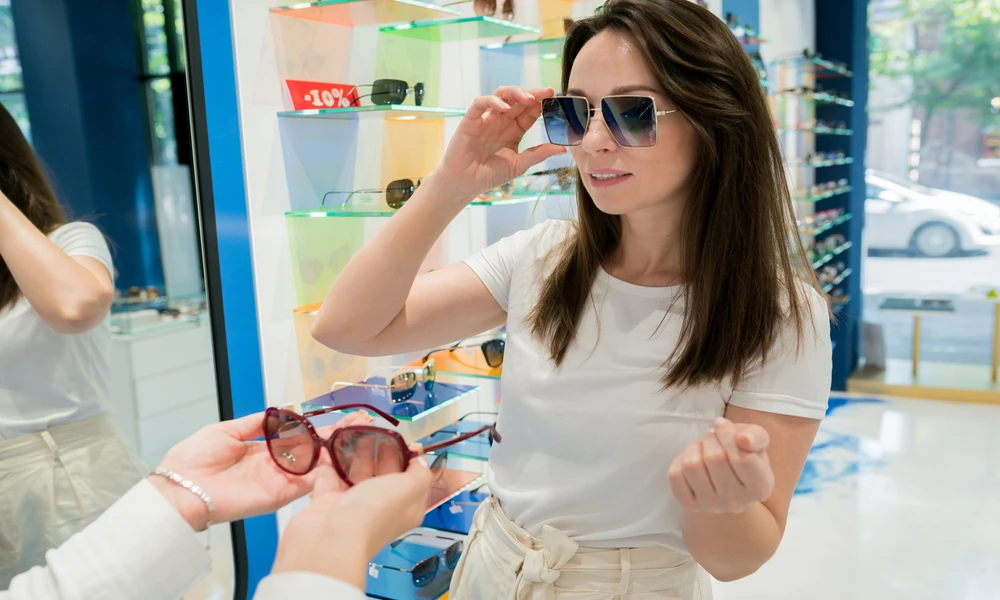
Lots of sunglasses shine in catalogs but collect dust on shelves. The lighting is soft, the model attractive, and the angle smart. Once you open the box and hold the genuine article, the enchantment ends. Finding frames that folks actually want on their faces is a whole different mental exercise. It’s not about what pops in a photo. It’s about what feels right once it’s in your hand and up against the mirror.
Try Them On Yourself
Obvious, right? Almost nobody does it anyway. Before you lock in a style, grab the sample pair, put it on, and just leave it there a few minutes. Are the arms pinching behind your ears? Is the bridge creeping down the instant you dip your head? Can you actually see through the bottom of the lens, or has the world gone a bit swimmy? A frame that bombs this test is going to bomb in the store, too, except there the customer just hangs it back up and strolls off, and you never hear a word about why.
Shapes That Flatter Real Faces
Wide faces want wider frames. Round faces tend to do better with something angular. Narrow faces disappear under oversized lenses. Your rack has to cover all of it, because the people walking in cover all of it. Classic shapes are the ones that carry a season. Aviators, squares, soft rounds, a tasteful cat eye, those keep moving from May right through August. Trendy stuff is worth a few hooks, because the energy it brings to a display is real, but it slides into the clearance pile faster than you’d ever expect.
Lenses People Can Actually See Through
Hold a lens up and look at a straight line somewhere across the room. A doorframe is perfect. If the line bows or wobbles, the optics are junk, and the person wearing them has a headache coming inside the hour. Tint is its own thing. Gray and brown lenses leave colors looking natural, and that’s precisely why they fly off the shelf. Mirrored and colored lenses have their crowd, especially the younger shoppers, so a few of those earn their keep. UV protection, meanwhile, isn’t up for debate. People ask about it now, and good on them for asking.
Build the Mix Around Your Crowd
A beach shop and a truck stop need completely different racks. One is selling bright, playful frames to families in flip-flops. The other is selling tough wraparounds to drivers squinting into the glare all day. Figure out who’s really coming through your door. Then build the mix to match them. Retailers ordering bulk sunglasses from a supplier like OE Wholesale Sunglasses can reach into a wide range of shapes, tints, and price tiers. This makes putting together a lineup for one particular crowd far easier than caving to some one-size-fits-all box. The closer your rack sits to your actual customers, the less you’ll slash prices later.
Let the Rack Teach You
Your best teacher isn’t a trend report. It’s what you sold last season. The three styles that cleared out first already told you, loud and clear, what your shoppers are into. So reorder those. Then throw in a cousin or two from the same family, a new color maybe, or a lens that’s a touch bigger. Slowly you end up with a rack built on what people actually buy instead of what you hoped they’d buy. That’s when a display finally starts pulling its weight.
Conclusion
Picking sunglasses well really comes down to one question. Would an ordinary person wear these all day and forget they’re even on? Comfort sells. Comfort comes back for more.