
1. INTRODUCTION
People are naturally drawn to various stones when they view a group of diamonds. Although it’s easy to believe that the biggest or most costly diamond will always be the most striking, this isn’t always the case. A diamond’s vibrant brightness, harmonious proportions, unique shape, or even just the way it reacts to light can make it stand out. Rather than a single specification, a collection of details is frequently what makes it appealing.
Finding a diamond that captures attention often comes down to more than size or a high grading score. exceptional diamonds tend to stand out because several qualities work together, including strong light performance, balanced proportions, distinctive shapes, and natural character. Looking at the stone as a whole rather than focusing on one specification can help buyers appreciate the details that give a diamond its unique presence and lasting visual appeal.
2. EXCEPTIONAL LIGHT PERFORMANCE
A dazzling diamond’s shine is one of the first things that people notice. A diamond’s ability to manage incoming light depends on how it is cut. Light can be reflected through the upper surface of a well-proportioned stone, creating bursts of movement and brilliance. A diamond tends to make a stronger visual impression when it appears vibrant from many perspectives rather than boring in some places. Even a relatively big diamond can appear extremely remarkable thanks to this light performance.
3. A DISTINCTIVE SHAPE
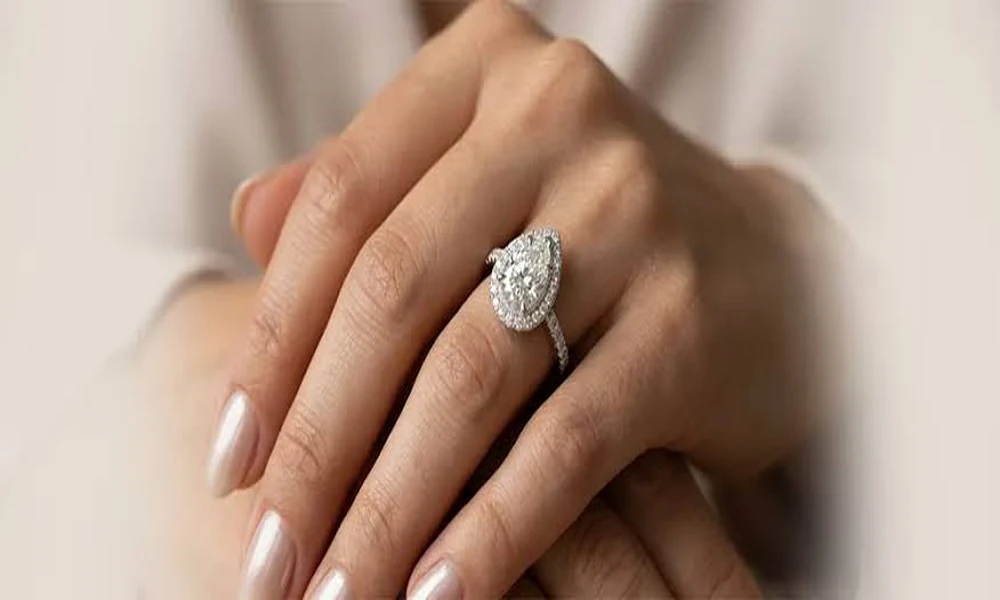
A diamond’s shape can give it a unique personality. Oval, pear, marquise, cushion, and emerald diamonds can provide rather diverse impressions, even if typical round diamonds are still highly popular. A unique or thoughtfully chosen shape can give jewellery a more intimate sense. Certain forms give the finger an elongated aspect, while others provide a softer or more retro appearance. The appropriate option frequently depends on the wearer’s personality and the jewellery’s style.
4. BALANCED PROPORTIONS
Despite having comparable carat weights and grading, two diamonds can have quite different appearances. The stone’s apparent equilibrium is influenced by its proportions, symmetry, and level of polishing. Harmonious proportions allow a diamond to have a beautiful shape and a uniform sheen throughout its surface. Because uneven facets may alter how light passes through a stone, symmetry is very crucial. When the diamond is examined attentively, these nuances may become apparent even if they might not be apparent on a grading report alone.
5. CHARACTER AND NATURAL FEATURES
Natural diamonds are not all the same. A stone’s unique identity can be derived from minute interior features. A diamond doesn’t always have to be perfect to look lovely, even if clarity is a crucial factor. Certain stones have inclusions that are very aesthetically pleasing yet hard to see without magnification. Chasing the greatest clarity grade is not as important as the overall organization and visibility of these qualities.
6. CONCLUSION
In the end, some of what distinguishes a diamond is subjective. While some people are drawn to tremendous brilliance, others might favour an exquisite shape or unique personality. Therefore, the diamond with the best specifications isn’t usually the most unforgettable. It is the stone whose design, personality, and appearance all come together in a way that seems unique and significant.


