

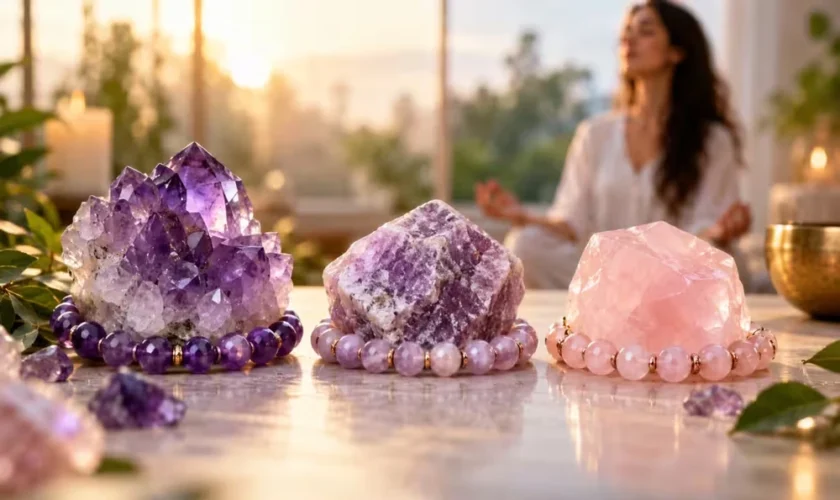
A crowded commute, a looming deadline, family expectations, a mind that will not switch off at 2 a.m. Stress in Indian city life rarely arrives alone. Many people look for small, grounding rituals to ease it, and crystals have become one of them.
This guide covers the stones most often chosen for calm, what each is traditionally associated with, how to wear and cleanse them, and how to spot genuine pieces. One honest note first: crystals are a complementary practice, not medical treatment. If anxiety is affecting your sleep, work or relationships, please speak to a doctor or qualified mental health professional.
How Crystals Are Said to Help with Anxiety and Stress
There is no scientific evidence that stones reduce anxiety through any energy of their own. What wearers describe is more personal. A bracelet on the wrist becomes a physical cue: you notice it, take a slow breath, and pause. Combined with an intention, this can work like a mindfulness anchor.
Traditionally, calming stones are linked to the heart, throat, third eye and crown chakras, and to cooler colours such as violet, blue and soft green. Believers see these as soothing, while earthy black and brown stones are used for grounding.
Calming Stones Worth Trying
Amethyst
The best-known stone for stress. This violet quartz is traditionally associated with a quiet mind, restful sleep and spiritual focus, and linked to the third eye and crown chakras. Many wearers keep it for overthinking and bedtime restlessness. In Vedic astrology, it is often substituted for Neelam (blue sapphire) in certain contexts, but check with a qualified astrologer before wearing for planetary reasons.
Lepidolite
A lilac, mica-rich stone often described as a stone for emotional balance. It is sometimes called the “anxiety stone” in modern crystal circles because it contains lithium-bearing minerals. That is a mineral fact, not a health claim, and wearing it does not deliver any medication. It is a modern belief rather than an old tradition.
Blue Lace Agate
Soft, pale blue bands. Associated with the throat chakra, it is chosen by people who feel tongue-tied or tense during difficult conversations. Its gentle look suits daily wear.
Rose Quartz
The pink stone of self-compassion. It is traditionally linked to the heart chakra and often picked when stress comes from relationships, heartbreak or harsh self-criticism.
Moonstone
Linked to the moon and intuition, moonstone is associated with emotional ease, especially for those whose moods shift with stress. In Vedic astrology, it is the gem traditionally connected with Chandra, the Moon.
Black Tourmaline
If your anxiety feels like absorbing everyone else’s mood, black tourmaline is the grounding choice. It is also popular for nazar protection and for people in crowded workplaces or long commutes.
Fluorite
Often seen in green, purple and clear bands, fluorite is associated with mental clarity and tidy thinking. Students and professionals juggling many tasks often favour it.
Quick Comparison
| Stone | Colour | Traditionally linked to | Suits |
| Amethyst | Violet | Calm mind, sleep | Overthinkers |
| Lepidolite | Lilac | Emotional balance | Persistent worry |
| Blue lace agate | Pale blue | Gentle communication | Social tension |
| Rose quartz | Pink | Self-love | Relationship stress |
| Moonstone | Milky, shimmering | Intuition, mood ease | Emotional sensitivity |
| Black tourmaline | Black | Grounding, protection | Absorbing others’ stress |
| Fluorite | Green/purple | Focus | Work and study overload |
Which Wrist Should You Wear It On?
Traditions differ, and there is no single rule. A common belief is that the left wrist, closer to the heart and receptive side, takes in calming energy, while the right wrist projects energy outward. For stress relief, most people choose the left. If you are left-handed, some wearers reverse this. Go with whatever feels comfortable and natural.
Combining Stones
- Amethyst + rose quartz: calm mind with a softer heart.
- Black tourmaline + moonstone: grounding with emotional ease.
- Fluorite + blue lace agate: clear thinking and calm speech.
Two or three stones are plenty. A bracelet with too many types can feel scattered, and it is easier to understand what resonates when you keep it simple.
How to Cleanse and Charge Your Stones
Many Indian wearers cleanse stones around Shivratri, and the same ideas work through the year.
1. Smoke: pass the bracelet through incense or dhoop smoke.
2. Moonlight: leave it on a windowsill overnight, especially on a full moon.
3. Sound: a bell or singing bowl near the bracelet.
4. Intention: hold it for a minute and state what you want to feel.
Avoid soaking amethyst, lepidolite, fluorite and moonstone in water for long. Some are softer or can fade. Strong sunlight can fade amethyst and rose quartz over time. Keep bracelets away from perfume, and remove them before swimming or workouts.
How to Spot Genuine Stones
Imitations are common, so a few cautions help:
- Amethyst: very uniform, glassy purple is often glass or dyed quartz. Real stones show slight colour variation.
- Lepidolite: should have a slightly sparkly, flaky texture. Dyed lookalikes are plain.
- Blue lace agate: dyed agate can be an unnaturally bright blue.
- Moonstone: many “rainbow moonstones” are labradorite or glass.
- Rose quartz: very dark, even pink may be dyed.
Buy from sellers who name the stone honestly, and ask about its source. Real stones feel cool to the touch and warm slowly, while plastic and glass behave differently, but this is not a reliable test alone.
Making Crystals Part of a Calmer Routine
A bracelet works best alongside habits that are known to help: regular sleep, movement, pranayama, and time away from screens. Try touching your bracelet while taking five slow breaths before a meeting, or wear it during evening meditation.
FAQs
Which crystal is best for anxiety?
Amethyst, lepidolite and blue lace agate are the most commonly chosen. The best stone is the one you feel drawn to.
Can crystals cure anxiety?
No. They are a supportive, mindful practice and not a treatment. Seek professional help for persistent anxiety.
Can I wear more than one calming stone?
Yes. Two or three complementary stones are common.
How often should I cleanse my bracelet?
Many wearers do it monthly, or whenever they feel it needs refreshing.
Conclusion
Crystals for anxiety and stress are best seen as gentle companions: amethyst for a quieter mind, lepidolite for emotional balance, blue lace agate for calm speech, rose quartz for kindness to yourself, and black tourmaline for grounding. Choose genuine stones, cleanse them regularly, and pair them with healthy routines and professional support where needed.
If you are unsure where to begin, explore Ankastra’s anti-stress and peace and clarity bracelet collections, or use the free crystal guidance to find a stone that suits you.